
Blog
Originally published on Substack
3 copy-paste emails that get late invoices paid
You did the work. You sent the invoice. The due date came and went, and now you are doing the thing nobody warns you about when you go freelance: staring at your bank app like it is going to apologize.
Here is the uncomfortable truth about late payments: most of them are not theft. They are admin pileups, forgotten approvals, and invoices that landed in the wrong inbox. A short, well-timed email fixes most of them. The freelancers who get paid on time are not luckier than you. They just follow up.
Below are the three emails I wish someone had handed me when I started. Copy them, fill in the brackets, send them in order. Each one comes with a tip on timing and tone.
Email 1: The gentle nudge (1 to 3 days past due)
Most late invoices are not disputes. They are someone's Tuesday getting buried. So the first email assumes the best and makes paying easy.
Subject: Quick check: invoice [Invoice #] for [Amount]
Body:
Hi [Client Name],
Hope you are well. Just flagging that invoice [Invoice #] for [Amount] was due on [Due Date]. It may have slipped through the cracks, so here are the details again: [payment details or invoice link].
Let me know once it is sorted, or if anything on your end is holding it up.
Thanks,
[Your Name]
Tip: send this 1 to 3 days after the due date, mid-morning, Tuesday through Thursday. Include the payment details in the same email so the client can pay without replying. And never apologize for asking for your own money. You did the work. The invoice is the receipt.
Email 2: The firm follow-up (7 to 10 days past due)
If the nudge got no reply, stop being casual. This email names the amount, names the due date, and asks for a specific payment date. Not "soon." Soon is where invoices go to die.
Subject: Following up: invoice [Invoice #], due [Due Date]
Body:
Hi [Client Name],
Following up on invoice [Invoice #] for [Amount], which was due on [Due Date]. I have not seen payment land yet.
If there is an issue with the invoice or the work itself, tell me and we will sort it out. Otherwise, can you confirm a payment date this week? I need that to plan my schedule.
Thanks,
[Your Name]
Tip: this is the email where you confirm the invoice actually reached the right person. Ask directly: "Can you confirm you received this, and who handles payment on your end?" The wrong inbox is the number one cause of silence, and it is the easiest problem to fix.
Email 3: The final notice (14 days or more past due)
This is the one with teeth. Late fees, if your invoice mentions them. Pausing work, if you are mid-project. Send this only if you mean every word of it.
Subject: Final notice: invoice [Invoice #] for [Amount] is [X] days overdue
Body:
Hi [Client Name],
Invoice [Invoice #] for [Amount] is now [X] days past due. I followed up on [date of email 1] and [date of email 2], and I have not received payment or a timeline.
Per the payment terms on the invoice, [late fee terms, for example: "a 1.5% monthly late fee now applies"]. I am also pausing work on [project name] until the balance is settled.
I would rather not take this further. If payment arrives by [new deadline], we can close this out cleanly.
[Your Name]
Tip: a final notice you will not enforce is worse than no notice at all. It teaches the client your deadlines are decorative. Do not threaten late fees your invoice never mentioned, and do not threaten to pause work you will not pause. Everything in this email should trace back to terms the client already agreed to, which is why the invoice you sent on day one matters so much.
The step most freelancers skip: put it on the invoice first
All three emails get easier if the invoice did its job before any of them were needed. Two lines, added once, change every conversation above:
1. Payment terms with a real date. "Net 15" beats "Net 30" beats nothing at all. A due date is a deadline. No due date is a suggestion.
2. A late fee line. "A 1.5% monthly late fee applies to balances more than 15 days past due." You may never charge it. The line exists so email 3 is a reminder, not a surprise. FreshBooks and Square both build payment reminders into their products for the same reason: the freelancers who follow up on schedule get paid faster.
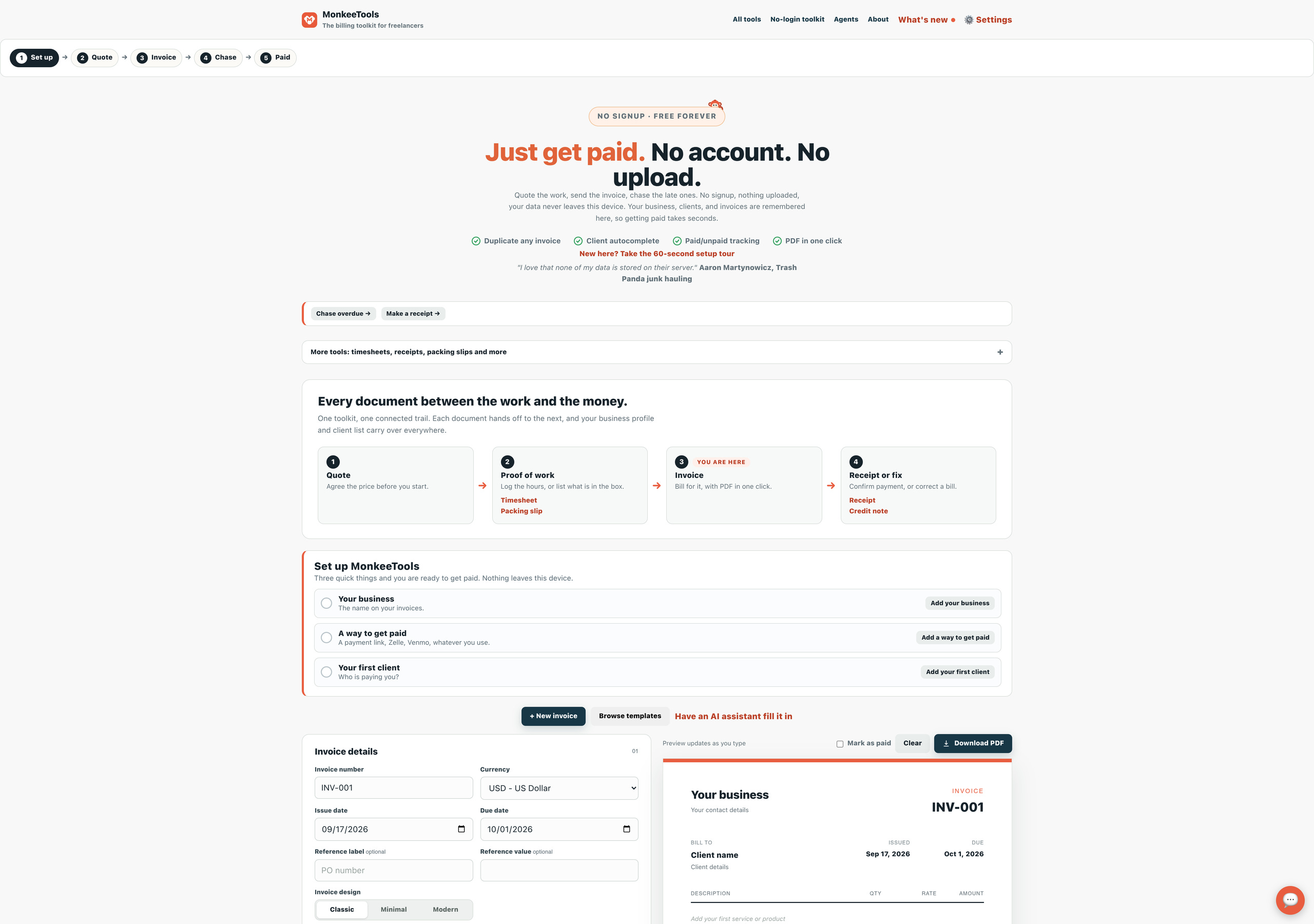
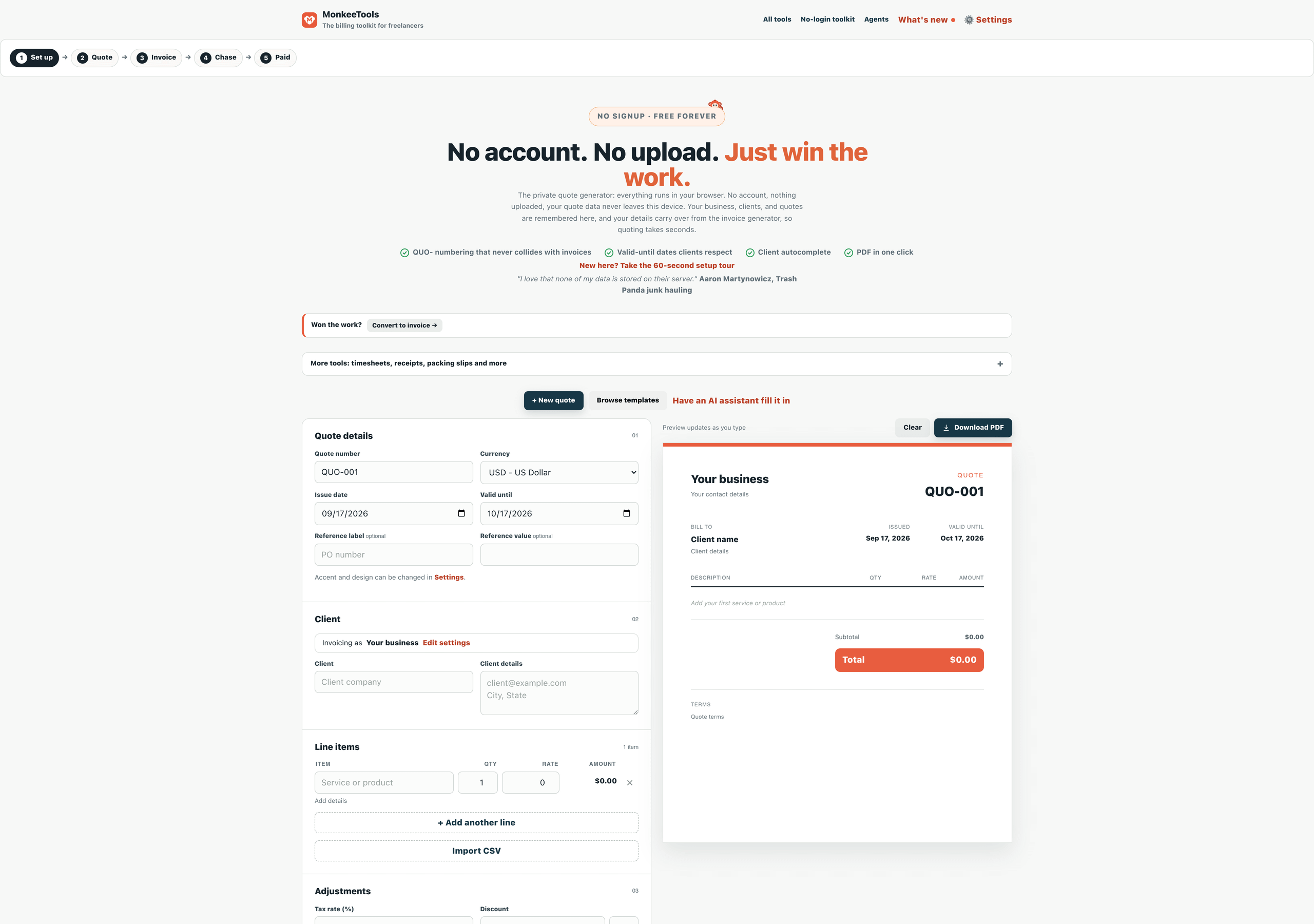
This is the part of the post where I tell you what we built. MonkeeTools is a no-signup invoice generator: payment terms field, due dates, late fee language, line items, the whole invoice, in about two minutes, right in your browser. No account, no app, and we never touch your money. Make the invoice at monkeetools.pages.dev, put your terms on it, and you may never need email 3.
The playbook, in one place
1. Day 1 to 3 past due: the gentle nudge. Assume it slipped through.
2. Day 7 to 10: the firm follow-up. Name the amount, ask for a date.
3. Day 14 and beyond: the final notice. Late fees, paused work, mean it.
4. Day zero, next time: terms and a late fee line on the invoice itself.
Late payments are a process problem, not a personality problem. You do not need to be pushy. You need a sequence, sent on time, every time.
If you want the invoice part handled before the first email is ever needed: monkeetools.pages.dev. No signup, two minutes, terms on the page.
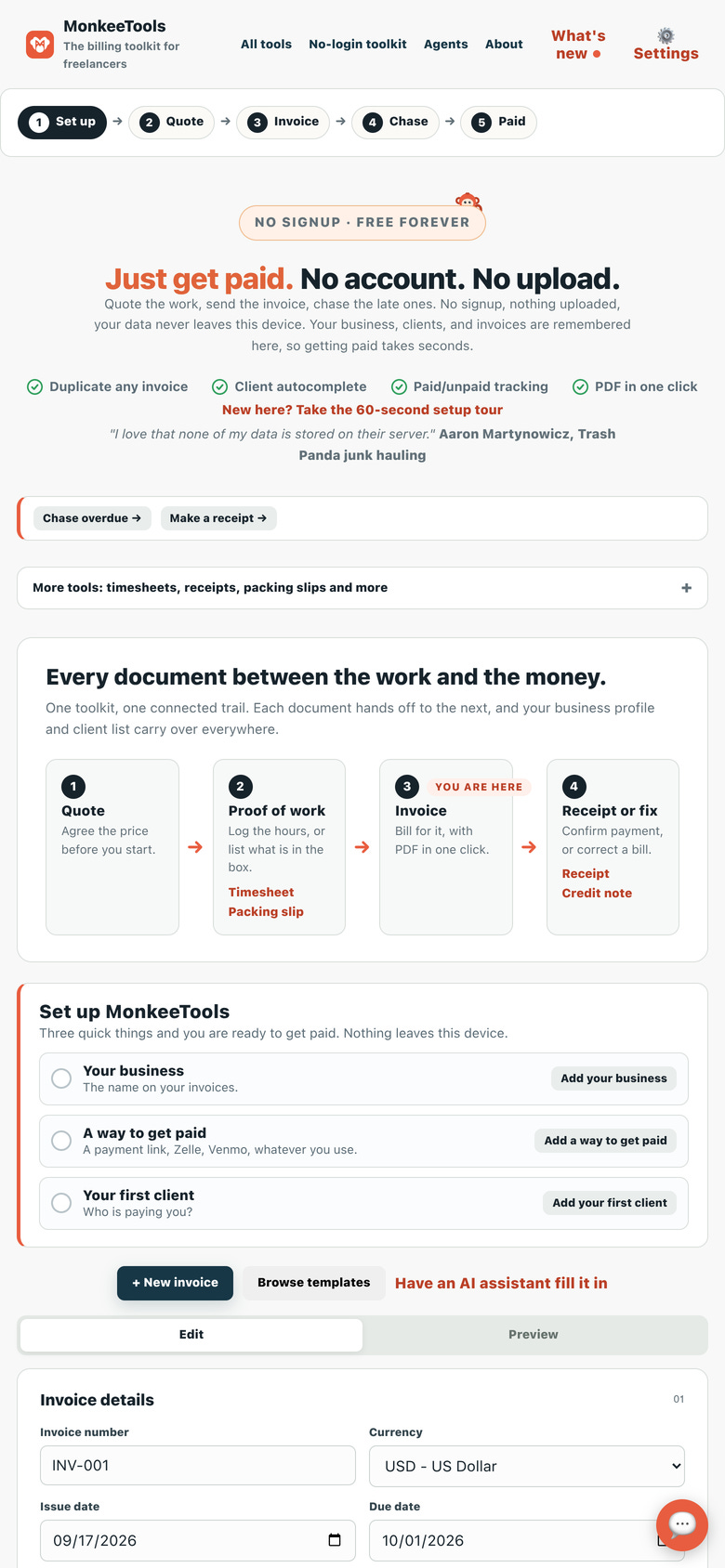
MonkeeTools is a no-signup invoice generator for freelancers. No account, no app, no email list. Your invoice data stays in your browser; the only thing stored on our servers is the shortened URL if you use our optional link shortener. We never process payments or take a percentage. Make an invoice at monkeetools.pages.dev.
Get new posts by email.
One post a week: honest build logs and leverage-through-technology pieces for freelancers and bootstrapped founders. No spam, unsubscribe anytime. Subscribe on Substack.